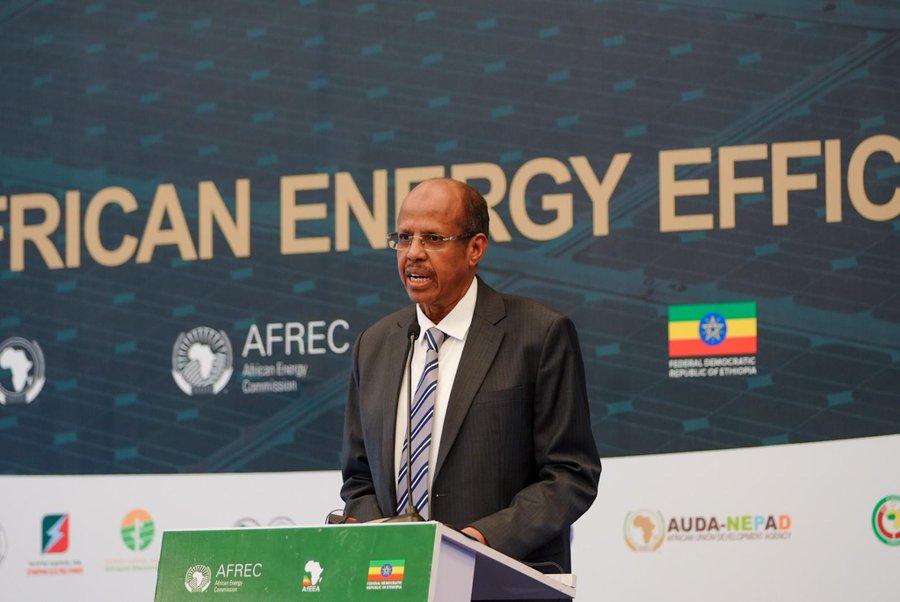
The African Union (AU) has expressed deep concern over rising instability in the Great Lakes region, following renewed clashes in South Kivu in eastern Democratic Republic of Congo (DRC) and Cibitoke Province in neighbouring Burundi.
In a statement issued on Thursday, AU Commission Chairperson Mahmoud Ali Youssouf warned that the latest violence threatens to undermine recent diplomatic progress and urged regional actors to exercise restraint.
Youssouf said the hostilities, particularly those affecting civilian populations, run contrary to the momentum generated by the Doha Framework Agreement between the DRC government and the Alliance Fleuve Congo/Movements of 23 March (AFC/M23), as well as the Washington D.C. Agreement between the DRC and Rwanda.
Both agreements were designed to de-escalate long-standing tensions and facilitate a return to political dialogue.
The AU Chairperson lamented the civilian impact of the renewed clashes, describing the violence as regrettable and avoidable.
He expressed solidarity with affected communities in both the DRC and Burundi, noting that the AU remains committed to supporting humanitarian and stabilisation efforts where needed.
Youssouf also reiterated the African Union’s established position that sustainable peace in the Great Lakes region depends on unwavering respect for the sovereignty and territorial integrity of all states.
He condemned, once again, any attempts to establish parallel administrations in eastern Congo—an issue that has remained a key source of friction between the Congolese government and armed groups operating in the region.
He further called on regional governments to fully honour their commitments under the Addis Ababa Framework Agreement, the region’s cornerstone pact for peace and security, and to comply with the Pact on Non-Aggression and Mutual Defence under the International Conference on the Great Lakes Region (ICGLR).
These obligations, he emphasized, are essential to curbing cross-border hostilities and fostering long-term stability.
Youssouf reaffirmed the African Union’s readiness to collaborate closely with regional bodies, international partners, and national governments to reinvigorate a comprehensive security dialogue.
Such coordination, he said, is critical to halting the cycle of violence and advancing political solutions capable of ending persistent instability in the Great Lakes region.
The AU’s appeal comes at a time when diplomatic observers warn that deteriorating security conditions—if unaddressed—could jeopardize recent peace gains and heighten humanitarian needs across the region.































Comments
Sign in with Google to comment, reply, and like comments.
Continue with Google